
The garden tools industry is a vital segment of the global hardware and horticultural equipment market, driven by the growing interest in home gardening, urban landscaping, and sustainable outdoor maintenance. This industry encompasses a wide range of products designed to meet the needs of both residential and commercial users, with distinct product categories, regional consumption patterns, and leading brand players. This analysis focuses on the main product distribution, product categories, key consumer markets, and major brands of the garden tools industry.
1. Main Product Distribution and Categories
Garden tools can be broadly classified into two core categories: hand tools and power tools, each with unique subcategories and application scenarios. The product distribution is closely linked to user needs, with hand tools dominating the low-end and daily-use market, while power tools lead the medium-to-high-end and professional market. The classification and specific products are detailed as follows:
1.1 Hand Tools
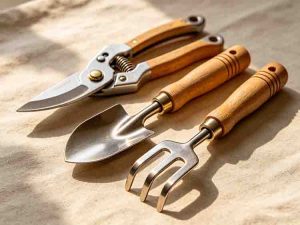
Hand tools are the foundation of the garden tools industry, characterized by simple structure, low cost, and ease of use, mainly used for small-scale gardening tasks such as planting, pruning, and cleaning. They are widely distributed in both residential and commercial scenarios, especially popular among amateur gardeners and small-scale landscaping workers. Key subcategories and products include:
-
Pruning Tools: Including secateurs (anvil pruners), grass shears, loppers, high-branch shears, and hedge shears, which are used for trimming branches, leaves, and hedges to maintain the shape of plants and promote their growth. These tools are often made of high-
-
quality metal alloys, making them durable and sharp.
-
Soil Cultivation Tools: Such as spades, shovels, garden forks, trowels, hoes, and rakes. These tools are used for turning soil, sowing, transplanting, and cleaning fallen leaves. Common types include three-tooth rakes, flat hoes, and flower shovels, which are essential for basic garden maintenance.
-
Auxiliary Hand Tools: Including garden knives, wire cutters, and small flower tool sets (combining shovels, rakes, and hoes), which are suitable for fine operations such as cutting vines, arranging flowers, and small-scale weeding.
1.2 Power Tools
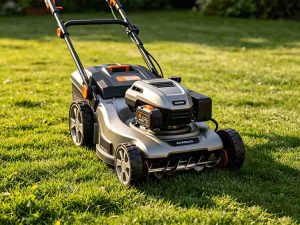
Power tools are driven by electricity, gasoline, or lithium batteries, featuring high efficiency and strong performance, mainly used for large-scale or heavy-duty gardening tasks. With the advancement of technology, power tools are developing towards intelligence, environmental protection, and ergonomics, gradually replacing manual labor in commercial and large residential scenarios. Key subcategories and products include:
-
Lawn Maintenance Power Tools: Such as lawn mowers (including riding mowers and walk-behind mowers), string trimmers, and lawn aerators. These tools are used for trimming lawns, tidying grass edges, and improving soil breathability, widely used in parks, golf courses, and large residential communities.
-
Pruning and Cutting Power Tools: Including electric chain saws, gasoline chain saws, and hedge trimmers. These tools are suitable for pruning thick branches and large shrubs, with high cutting efficiency and are mainly used by professional landscaping teams and forestry workers.
-
Irrigation and Pest Control Tools: Such as water pumps, sprayers, and atomizers, used for watering plants and preventing pests and diseases. With the rise of smart gardening, intelligent irrigation tools integrated with IoT technology are becoming increasingly popular.
-
Other Power Tools: Including rototillers, leaf blowers, and trenchers, which are used for soil cultivation, leaf cleaning, and trench digging, meeting the diverse needs of large-scale garden maintenance.
2. Key Consumer Markets for Each Product Category
The consumption of garden tools varies significantly by region, driven by factors such as economic level, gardening culture, urbanization rate, and climate conditions. Different product categories have distinct target markets, with North America, Europe, and Asia-Pacific being the core consumer regions globally.
2.1 Consumer Markets for Hand Tools
Hand tools have a global consumer base, with the main markets concentrated in regions with a strong gardening culture and high residential greening rate:
-
North America (United States, Canada): As the world’s largest consumer market for garden tools, North America has a mature DIY gardening culture. Amateur gardeners account for a large proportion of hand tool consumers, with high demand for high-quality, ergonomic hand tools such as pruning shears and garden trowels. The United States alone accounts for more than 30% of the global hand tool consumption of garden tools.
-
Europe (Germany, the United Kingdom, France): European countries have a long history of gardening, with high attention to garden aesthetics. Hand tools are widely used in residential gardens, community green spaces, and small-scale farms. Germany and the United Kingdom are the main consumer markets, with consumers preferring environmentally friendly and durable hand tools made of sustainable materials.
-
Asia-Pacific (China, Japan, India): With the rapid urbanization and rising living standards in Asia-Pacific countries, the demand for hand tools is growing steadily. China, as a major producer and consumer, has a large number of residential users and small-scale landscaping enterprises, with strong demand for affordable and practical hand tools. Japan and South Korea focus on refined gardening, with high demand for small, exquisite hand tools.
2.2 Consumer Markets for Power Tools
Power tools have higher requirements for economic strength and application scenarios, with the main markets concentrated in developed regions and large emerging economies:
-
North America: The largest consumer market for power tools, driven by large residential yards, commercial landscaping projects, and golf courses. The United States and Canada have high demand for lawn mowers, chain saws, and leaf blowers, with a preference for battery-powered and intelligent power tools that are environmentally friendly and easy to operate. The region accounts for about 40% of the global power tool market share of garden tools.
-
Europe: Germany, France, and Italy are the core markets for power tools. The region has strict environmental protection regulations, promoting the development of energy-saving and low-emission power tools (such as electric and lithium battery-powered tools). Commercial landscaping enterprises and professional gardeners are the main consumers, with high demand for high-performance and durable power tools such as hedge trimmers and rototillers.
-
Asia-Pacific: China, India, and Australia are the fastest-growing markets for power tools. China, as a major producer of garden tools, has a large number of export-oriented enterprises, and the domestic market demand is also rising with the expansion of urban greening and commercial landscaping projects. India and Australia have a large number of rural and suburban areas, with strong demand for lawn mowers and irrigation tools.
-
Middle East and Africa: With the development of urbanization and the construction of luxury communities and golf courses, the demand for power tools is growing gradually, mainly focusing on large-scale lawn maintenance tools and irrigation equipment.
3. Major Brands in the Garden Tools Industry
The global garden tools industry is highly competitive, with international brands dominating the medium-to-high-end market and local brands occupying the low-end and mid-range market. The major brands are mainly concentrated in Europe, North America, and China, with distinct brand positioning and market advantages:
3.1 International Leading Brands
-
Husqvarna (Sweden): Founded in 1689, Husqvarna is a global leader in the garden tools industry, covering forestry, landscape maintenance, and construction equipment. The brand has a wide range of products, including hand tools, power tools (such as chain saws and lawn mowers), and intelligent gardening equipment. It has tens of thousands of distributors in more than 100 countries and regions, with a strong market influence in Europe and North America.
-
STIHL (Germany): Founded in 1926, STIHL is the inventor of the chainsaw and a leader in the garden and forestry tools field. The brand focuses on power tools, such as gasoline chain saws, electric hedge trimmers, and leaf blowers, known for their high performance and durability. It has 36 wholly-owned sales subsidiaries worldwide, with products sold in more than 160 countries and regions, and a strong market share in the professional power tool segment.
-
Toro (United States): Listed on the US stock market with a market capitalization of 9.11 billion US dollars (as of April 21, 2026), Toro is a leading brand in the North American garden tools market. The brand focuses on lawn maintenance equipment, such as lawn mowers and irrigation systems, with a high reputation in the residential and commercial markets. It is known for its technological innovation and user-friendly design.
3.2 Chinese Leading Brands
-
Greenworks (China): Founded in 2007, Greenworks is a leading enterprise in the new energy garden tools industry in China, focusing on lithium battery-powered garden tools. The brand has independent research and development capabilities in lithium battery technology and brushless motors, with products sold in more than 50 countries and regions. It is listed on the Shenzhen Stock Exchange and has a strong influence in the global mid-to-high-end new energy garden tools market.
-
Huasheng Zhongtian (China): Founded in 1951, Huasheng Zhongtian is a large-scale enterprise integrating science, industry, and trade, mainly producing small general gasoline engines, garden machinery, and plant protection machinery. It is a major production and export base for garden tools in China, with products covering 350 varieties in seven series, sold in more than 80 countries and regions.
-
DAYE (China): Founded in 2006 and listed on the Shenzhen Stock Exchange, DAYE is a leading enterprise in the Chinese garden machinery industry, focusing on the R&D, production, and sales of lawn mowers, string trimmers, and other power tools. Its products are exported to more than 50 countries and regions, with a strong market share in the global mid-range power tool segment.
3.3 Other Influential Brands
In addition to the above brands, there are many other influential players in the global garden tools industry, such as WORX (United States), a brand focusing on lightweight and intelligent garden tools; Topsun (China), which specializes in gasoline chain saws and riding lawn mowers; and YAT (China), a leader in the electric chain saw segment with annual sales exceeding 1 million units. These brands occupy certain market shares in their respective segments, promoting the diversification and innovation of the industry.
4. Conclusion
The garden tools industry is showing a steady growth trend, driven by factors such as the rising demand for home gardening, the promotion of urban greening, and technological innovation. Hand tools and power tools are the two core product categories, with distinct consumer markets: hand tools have a global consumer base, while power tools are mainly concentrated in developed regions and large emerging economies. Internationally, brands such as Husqvarna, STIHL, and Toro dominate the high-end market, while Chinese brands such as Greenworks and Huasheng Zhongtian are rising rapidly in the global market with cost advantages and technological innovation capabilities. In the future, with the increasing emphasis on environmental protection and intelligence, the garden tools industry will develop towards more sustainable, intelligent, and user-friendly directions, bringing new development opportunities for market players.